24 hour emergency service, electrical repair, panel upgrades, generator installation and EV chargers in Peoria. Call (855) 679-2483 and get connected with an independent licensed electrician who works locally.
Peoria climbs from the west bank of the Illinois River up a steep bluff and then spreads north across flat farmland toward Dunlap. That shape gives the city a wide range of homes: Victorian mansions on the West Bluff, worker cottages on the East Bluff, and ranch houses and newer subdivisions on the north side. Ameren Illinois carries the power, and summer storms, ice in winter and river flooding all test old wiring. When something goes wrong, the step is simple: call (855) 679-2483 and get connected with a licensed electrician.
By calling, you agree to be connected with an independent electrician, who may call or text you back about your request at the number you call from. Calls may be recorded for quality and routing. Consent is not a condition of any purchase, and you can opt out at any time; message and data rates may apply. Privacy policy.
Serving West Bluff, East Bluff, Moss-Bradley, Uplands, Averyville, North Peoria and every other Peoria neighborhood.
Peoria at a glance
Electric utility
Ameren Illinois delivers electricity to homes and businesses across Peoria
Permits and inspections
City of Peoria Community Development Department, Permits and Inspections (City Hall, 419 Fulton Street)
County
Peoria County
ZIP codes include
61602 · 61603 · 61604 · 61605 · 61614 · 61615
Electrical services in Peoria
What do you need help with in Peoria, IL?
The calls Peoria homeowners make most, followed by every service independent licensed electricians handle here.
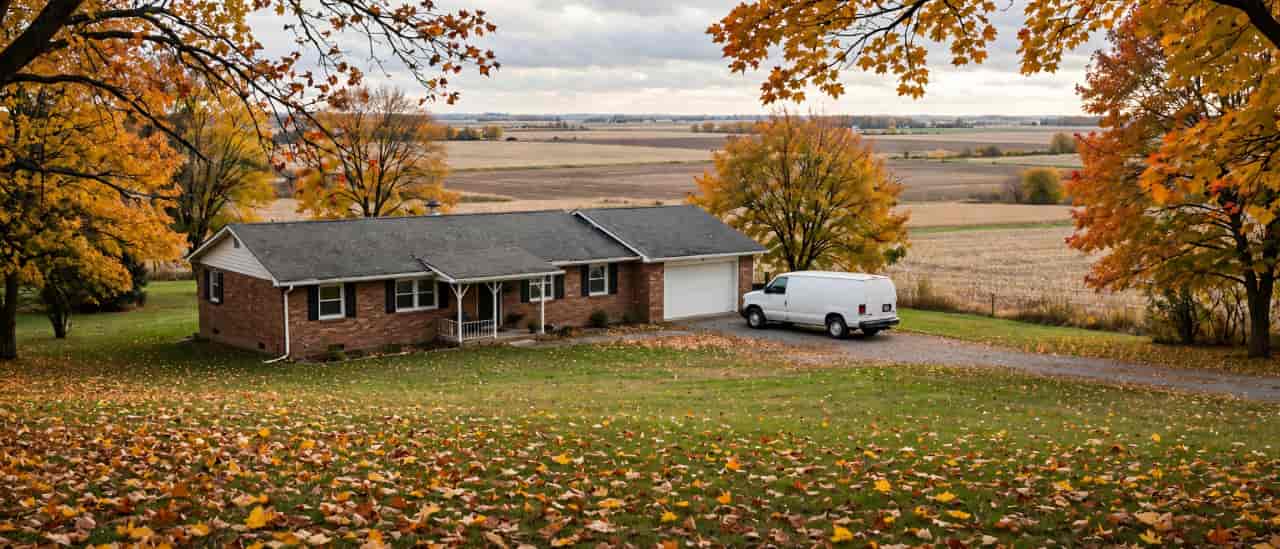
The West Bluff and Moss-Bradley hold large homes from the 1880s through the 1920s, some still carrying knob-and-tube runs behind plaster. The East Bluff is a dense grid of modest early-1900s frame houses and bungalows. Averyville and the older North Valley mix century-old houses with later infill. North Peoria, past War Memorial Drive, is mostly 1950s through 1990s ranches and split-levels, with newer subdivisions farther out toward Route 91 and the county line.
Problems that come up again and again in local homes, and the service that fixes each one.
01
Knob-and-tube in bluff-top Victorians
Many West Bluff and Moss-Bradley houses were wired before grounding was standard, and decades of remodeling left old cloth-insulated runs spliced into newer circuits. Insurers increasingly ask about it, and buried junctions in attics run hot under insulation.
Central Illinois thunderstorms and winter ice bring down branches across the older tree-lined streets. When a limb pulls the service drop, the mast and meter base on the house are the owner’s responsibility to repair before Ameren reconnects.
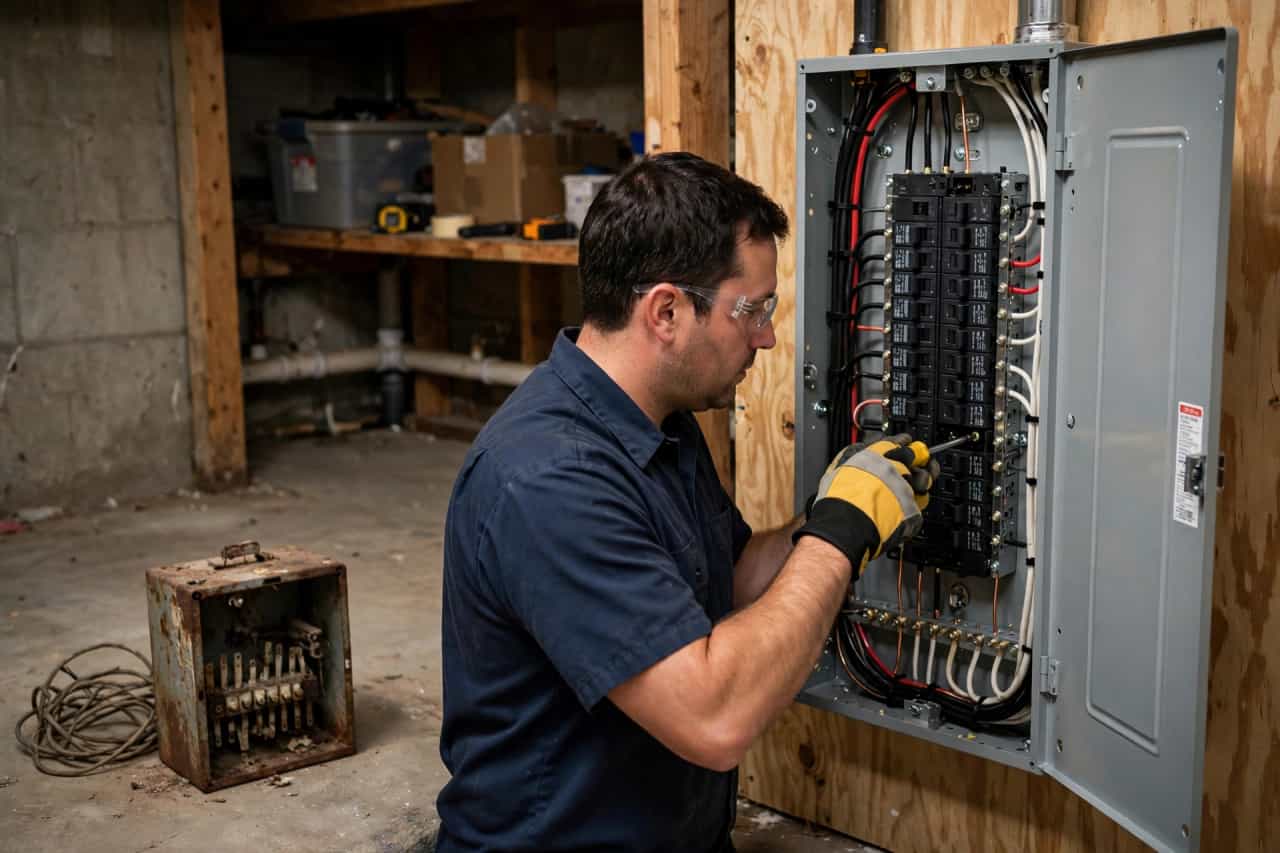
North-side ranches from the 1950s and 1960s often still run 60- or 100-amp service. Adding central air, an induction range or a car charger usually means a load review and, often, a new panel.
History, housing, weather and rules that shape electrical work in Peoria, IL.
Living on the bluff versus the valley
Peoria’s geography splits neatly into levels. The downtown and Warehouse District sit near the river, the bluffs rise sharply behind them, and the north side flattens out into former farmland. Each level has its own electrical character. Riverfront buildings deal with moisture and flood history, bluff neighborhoods carry the oldest wiring in the city, and the north side mostly needs capacity for modern loads rather than full rewiring.
West Bluff mansions and their hidden wiring
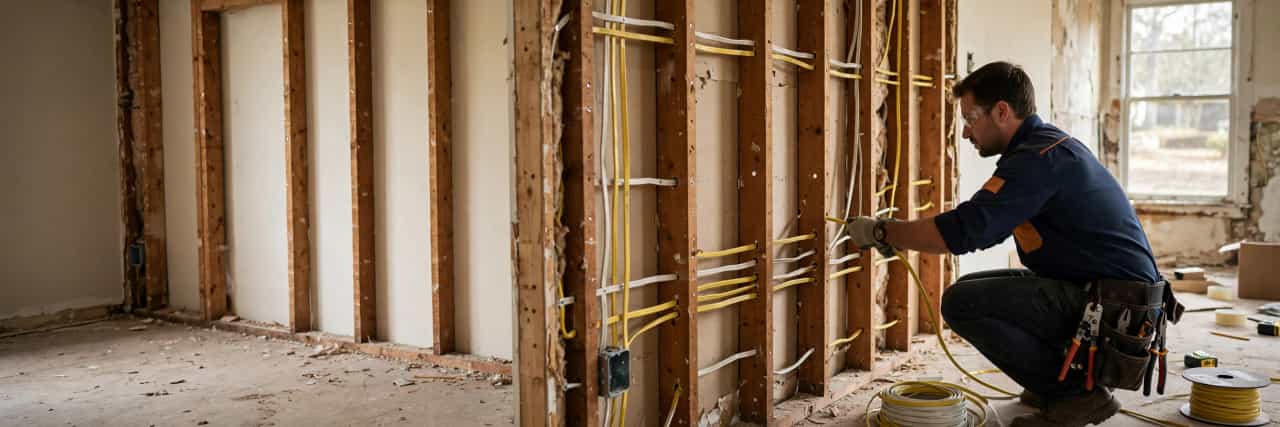
The West Bluff, around Bradley University and Moss Avenue, has some of the largest historic homes in central Illinois. Many were wired early in the twentieth century and then rewired room by room over a hundred years. That patchwork can leave live knob-and-tube in walls nobody opened, two-wire circuits feeding three-prong outlets, and junctions hidden behind plaster. An inspection maps what is there before any remodel begins.
Moss-Bradley historic district considerations
Moss-Bradley is a designated historic area, so exterior changes such as new meter locations or visible conduit can draw attention from the city’s historic preservation process. Interior rewiring is usually less visible, but fishing new cable through plaster and lath takes patience. Electricians who work in older homes plan routes through closets and baseboards to limit damage to original trim.
East Bluff bungalows and small services
The East Bluff grid is full of early-1900s frame houses, many on narrow lots with alley access. Original services were small, and some still have fuse boxes or early breaker panels with just a handful of circuits. Window air conditioners, space heaters and modern kitchens push those circuits past what they were built for, which shows up as warm cords, flickering lights and nuisance trips.
Averyville and the North Valley
Averyville, once its own village before Peoria annexed it, and the North Valley below the bluff mix century-old houses with later rentals and infill. Rental conversions sometimes added units without adding service capacity, and shared basements can hide old splices. When a building changes hands or gets split into apartments, an electrical inspection is a sensible first step.
North Peoria ranches and split-levels
North of War Memorial Drive and out along Knoxville and University, Peoria filled in with postwar ranches, split-levels and 1970s and 1980s subdivisions. These homes usually have grounded wiring but modest panels. Aluminum branch wiring turns up in some houses from the late 1960s and early 1970s, and those terminations deserve a close look before adding load.
Newer subdivisions near the county line
The farthest north edges of the city, toward Route 91 and the Dunlap school area, hold newer subdivisions built from the 1990s onward. These houses are better suited to high loads, but many owners now want EV chargers, backup generators and whole-home surge protection. Planning those additions around an existing 200-amp service is mostly a matter of load calculations and good panel layout.
The Illinois River and the 2013 flood
In April 2013 the Illinois River at Peoria crested at a record level, flooding parts of the riverfront and low-lying neighborhoods. Water that reaches panels, outlets or furnace wiring leaves corrosion behind even after it recedes. Equipment that has been submerged should stay off until an electrician checks it, and any building near the river benefits from keeping panels and receptacles well above basement floor level.
Central Illinois thunderstorms and straight-line winds
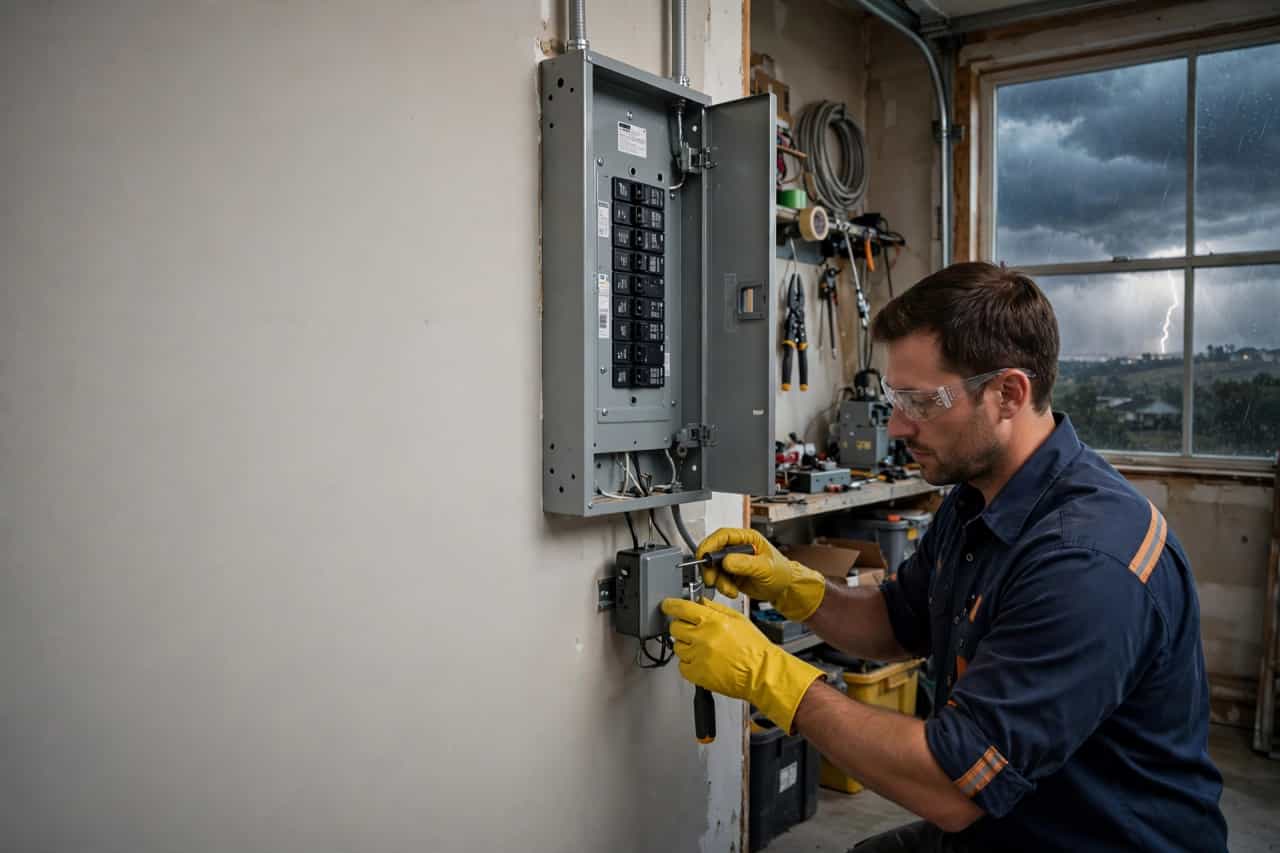
Summer storm lines move across the prairie quickly, and Peoria regularly sees damaging straight-line winds. Mature oaks and maples on the bluffs drop limbs onto service drops, and lightning nearby sends surges through utility lines. After a storm, a sagging mast, a meter base pulled from the siding or lights that brighten and dim all call for an electrician before the power comes back fully.
Ice storms and winter loads
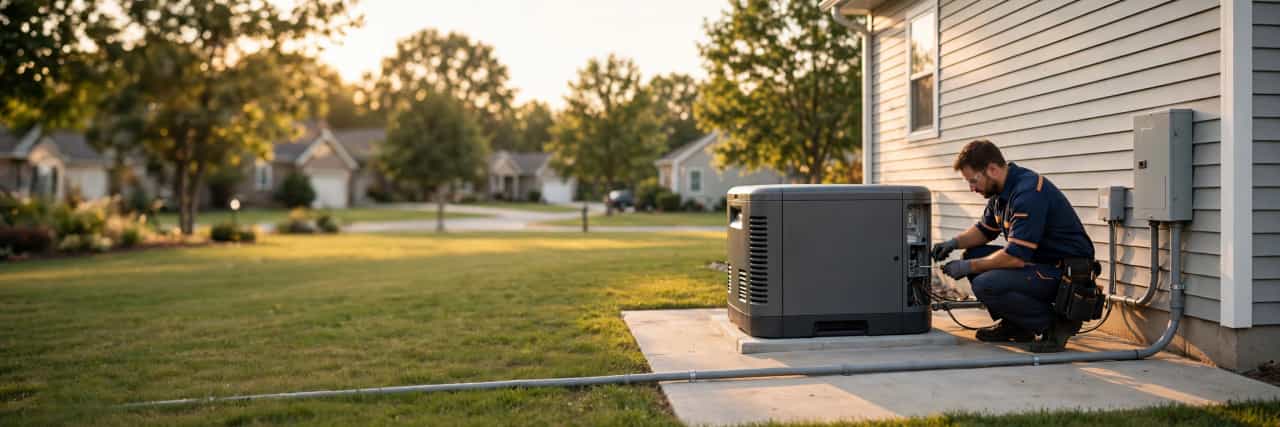
Freezing rain coats lines and branches several times a decade in central Illinois. Long outages in January push families toward portable generators, and backfeeding a house through a dryer outlet is dangerous for utility crews and neighbors. A transfer switch or interlock, installed with a permit, lets a generator feed the furnace blower, sump pump and refrigerator safely.
Basement sump pumps and wet foundations
Clay soils and spring rains keep many Peoria basements damp. Sump pumps run hard in March and April, and a pump on a shared circuit or an old extension cord can fail exactly when it is needed. A dedicated GFCI-protected circuit, and sometimes a battery or generator backup, keeps the basement dry through storm-season outages.
Ameren Illinois service and upgrades
Ameren Illinois owns the lines up to the meter, while homeowners own the mast, meter base and everything inside. A service upgrade involves coordination with Ameren for disconnect and reconnect, plus a city inspection. Ameren also runs energy-efficiency programs for its Illinois customers, and an electrician can help you plan lighting and appliance changes around them.
Bradley University rentals
Streets around Bradley University carry a lot of student housing, often older houses split into several rooms or units. Overloaded power strips, missing smoke alarm circuits and tired outlets are common findings. Landlords who schedule an inspection between leases can catch heat damage and loose connections before a tenant does.
Downtown and Warehouse District lofts
The Warehouse District south of downtown has converted old industrial buildings into lofts, restaurants and offices. Those conversions involve heavy commercial service, long feeder runs and code requirements for mixed-use occupancy. Owners of storefronts and small offices downtown often need commercial electricians who understand both the old structure and current code.
Lighting older interiors without losing character
High ceilings, pocket doors and original plaster medallions are part of what makes Peoria’s older homes valuable. Adding recessed lights or ceiling fans means working around joists and lath without wrecking finishes. Many owners choose period-style fixtures on new boxes rated for the weight, keeping the look while bringing the wiring up to date.
Surge protection for prairie lightning
Peoria sees frequent summer lightning, and modern furnaces, refrigerators and computers are sensitive to spikes. A whole-home surge protector at the panel handles surges from the utility side, while point-of-use strips protect electronics. Proper grounding and bonding, often missing in older homes, makes both work as intended.
EV charging in a cold climate
Electric vehicles lose range in central Illinois winters, so owners lean on Level 2 home charging. A 240-volt circuit in an attached garage is usually straightforward in north-side homes, but detached garages on bluff lots may need a trench and subpanel. A load calculation first tells you whether the existing service can carry it.
Permits, inspections and home sales
Electrical work inside Peoria requires a permit through the city, and inspectors check the work before walls close up. Buyers of older homes often find surprises during the sale inspection, from double-tapped breakers to ungrounded outlets. Fixing those with permitted work keeps the paperwork clean for the next sale.
How to reach help in Peoria
ProntoElectrician.com does not dispatch its own crews or use online forms. You call (855) 679-2483, describe what is happening, and get connected with an independent licensed electrician who works in the Peoria area. For sparking, smoke or a hot panel, step back, call 911 if there is any fire, and then make that call.
Questions
Questions from Peoria, IL homeowners
Is there a 24 hour emergency electrician in Peoria, IL?+
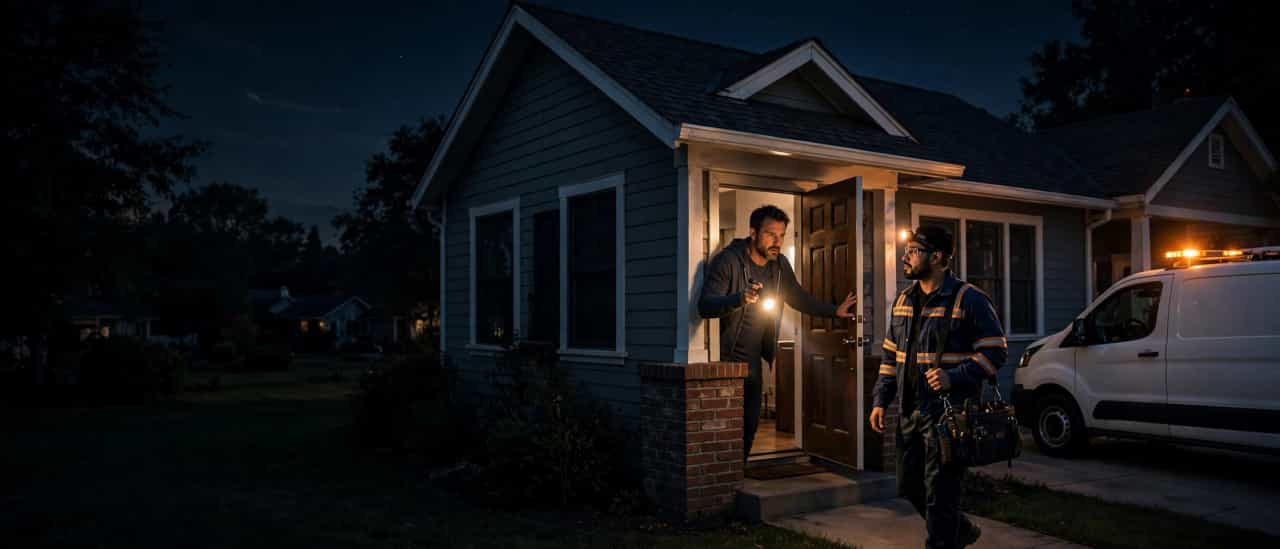
Yes. Call (855) 679-2483 any time, day or night, and you are connected with an independent licensed electrician who covers Peoria, including West Bluff, East Bluff, Moss-Bradley. For sparks, smoke or a hot panel, call 911 first.
Who handles electrical repair and generator installation in Peoria?+
Licensed electrical contractors working in Peoria County handle outlet and switch repair, circuit troubleshooting, panel work and standby generator installation. Permits go through City of Peoria Community Development Department, Permits and Inspections (City Hall, 419 Fulton Street).
Who issues electrical permits in Peoria?+
The City of Peoria’s Community Development Department handles electrical permits and inspections for addresses inside city limits. Homes in unincorporated Peoria County fall under the county instead, and a licensed electrician will know which office applies to your address.
Who do I call if my power keeps going out in Peoria?+
If the whole street is dark, report it to Ameren Illinois; if only your house or a few circuits keep failing, call (855) 679-2483 to reach a licensed electrician. Repeated outages limited to one home often point to a loose connection at the meter, panel or service mast.
What should I do if I smell burning from an outlet in Peoria?+
Stop using the outlet, keep people away, and switch off that circuit only if the panel is safe to reach. If you see smoke or flame, leave the house and call 911, then call an electrician once it is safe.
By calling, you agree to be connected with an independent electrician, who may call or text you back about your request at the number you call from. Calls may be recorded for quality and routing. Consent is not a condition of any purchase, and you can opt out at any time; message and data rates may apply. Privacy policy.
Free to call
Explain the problem in plain words
Connect with an independent licensed electrician near you
Smoke, flames or sparking? Leave the building and call 911 first.
Pronto Electrician is a free referral service. The electricians you are connected with are independent contractors, not employees or agents of Pronto Electrician. Pronto Electrician does not perform electrical work, and the electrician you choose sets the price, schedule, permits and warranty.
By calling, you agree to be connected with an independent electrician, who may call or text you back about your request at the number you call from. Calls may be recorded for quality and routing. Consent is not a condition of any purchase, and you can opt out at any time; message and data rates may apply. Privacy policy.