
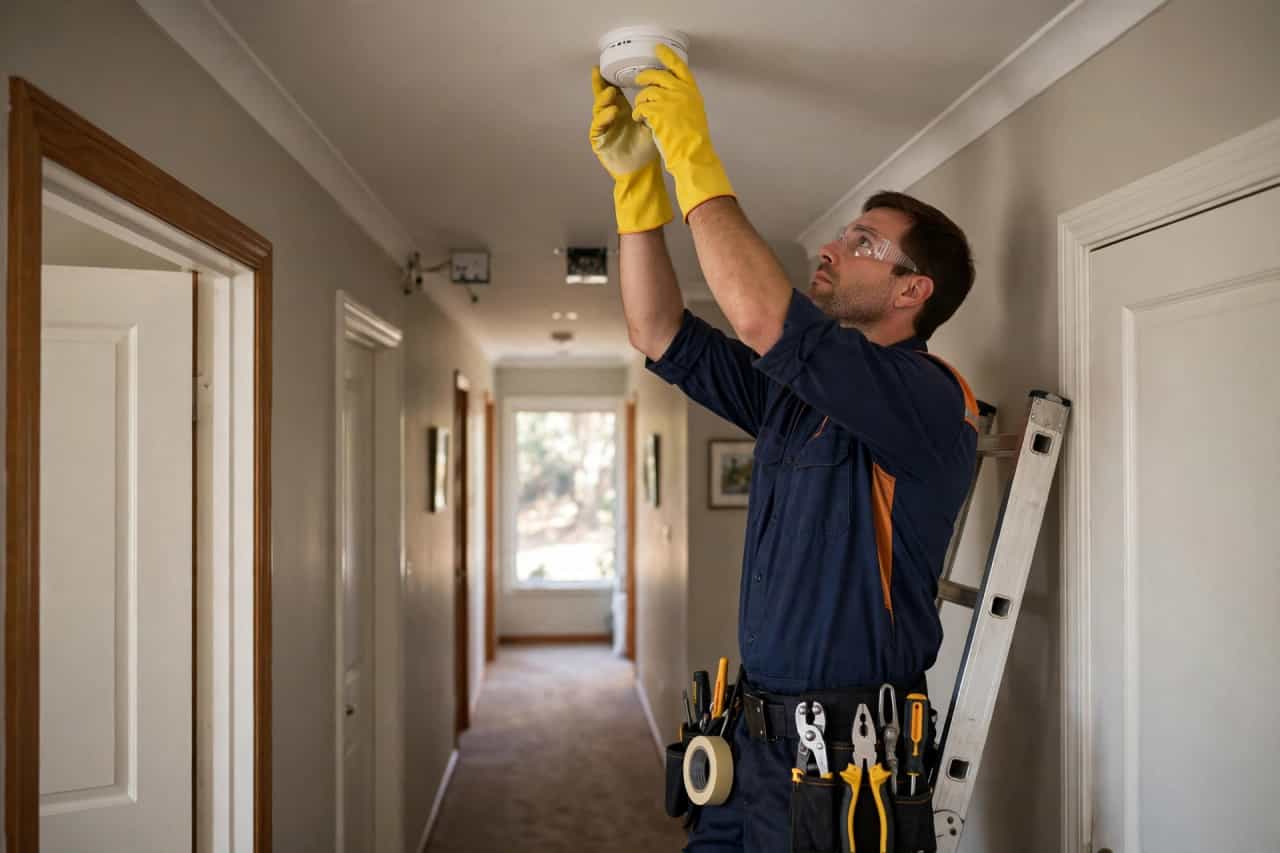
When you need hardwired smoke detectors
- Alarms are over 10 years old
- Remodel or addition
- Alarms not interconnected
- Frequent false alarms
- Selling or renting a home
Interconnection
Interconnected alarms sound together throughout the home. Interconnection can be wired or wireless.
Placement
Alarms go in bedrooms, outside sleeping areas and on each level. Avoid placing them too close to kitchens or bathrooms.
Replacing old alarms
Smoke alarms have expiration dates. Replace them with compatible models and test after installation.
Ionization, photoelectric and dual-sensor alarms
Ionization alarms respond quickly to fast, flaming fires, while photoelectric alarms respond better to slow, smoldering fires. Many fire-safety organizations recommend photoelectric or dual-sensor alarms, and photoelectric models are also less prone to nuisance alarms from cooking. Some states specify which types may be installed.
When alarms must be updated
Many states and cities require smoke and carbon monoxide alarms to be brought up to current standards when a home is sold, when a permit for an addition or major remodel is issued, or between rental tenants. Requirements differ by jurisdiction, so the electrician checks the local rule.
Replacing old hardwired alarms
Hardwired alarms connect through a plug-in harness. Brands use different connectors and interconnect signals, so replacing alarms usually means changing all of them to the same compatible line and swapping the harness. Some manufacturers make adapters to fit existing harnesses.
Stopping false alarms
Alarms too close to kitchens or bathrooms, dust inside aging units, or a failing unit on the interconnect can cause nuisance alarms throughout the home. Identifying the initiating alarm, which usually flashes differently, helps find the problem.
How the work is done
- Check existing alarms
- Plan placement
- Install wiring or wireless interconnect
- Mount alarms
- Test
What affects the price of hardwired smoke detectors
- Number of alarms
- Wiring access
- Wireless vs. wired
- Combination CO alarms
- Ceiling type
Hardwired Smoke Detectors questions
How often should smoke alarms be replaced?
Follow the manufacturer, commonly every 10 years.
Why does my smoke alarm chirp?
Low battery or end of life.
Can different brands be interconnected?
Usually not. Use compatible models.
Do I need CO alarms?
Yes, where fuel-burning appliances or attached garages exist.
Related work
Part of Smart Home Wiring..