
When you need outlet repair
- Plugs fall out or feel loose in the slots
- The cover plate or face is warm, brown or melted
- The outlet is dead with no tripped breaker or GFCI
- You hear crackling or see sparks beyond a tiny flash at contact
- One half works and the other does not
Why outlets fail
Receptacle contacts lose their spring tension after years of plugging and unplugging, so plugs make poor contact and heat up. Push-in back-stab connections loosen with heat cycling. In older homes, brittle insulation and overloaded circuits with space heaters or window air conditioners speed up wear.
A failed outlet can also be a symptom: if an earlier outlet on the same circuit has a loose splice, everything after it can go dead, even though the dead outlet itself is fine.
What a proper outlet repair includes
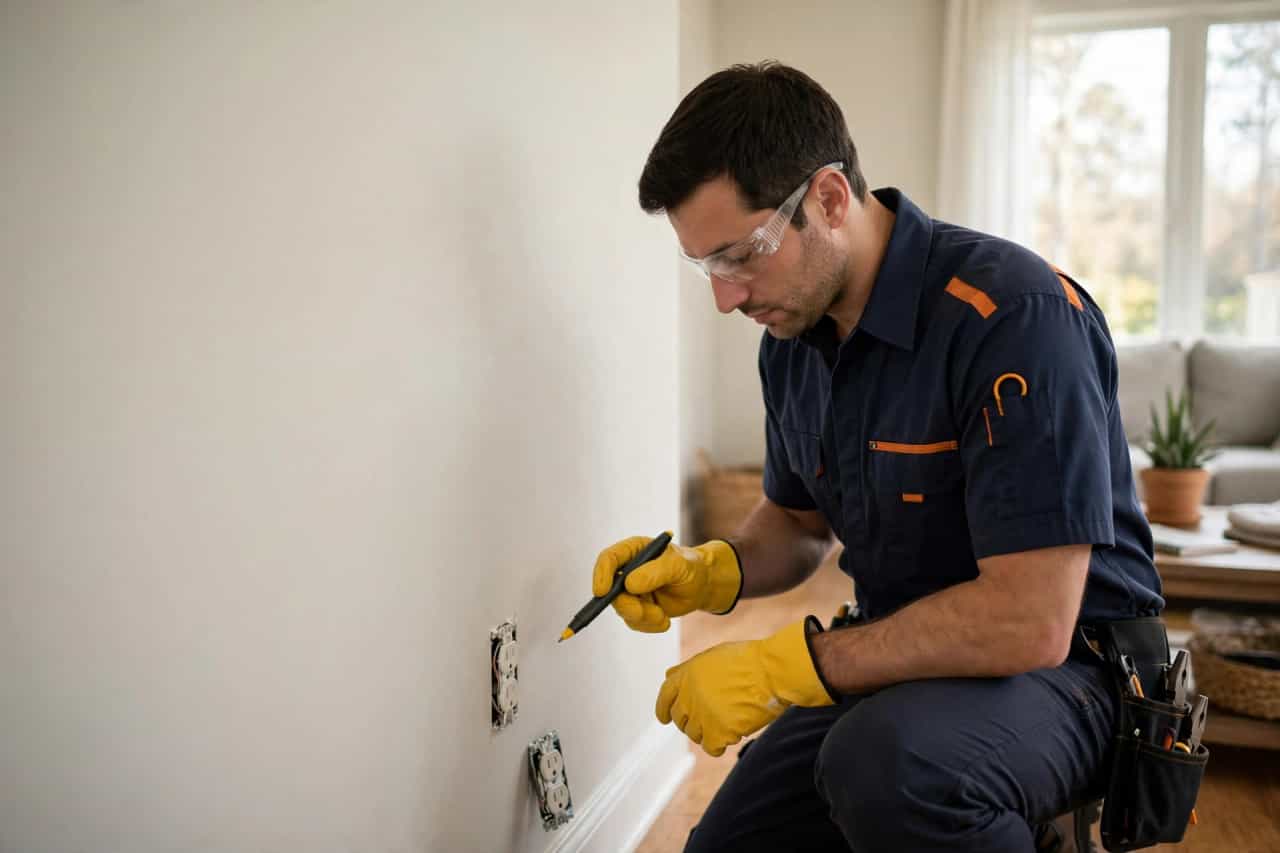
The electrician turns off and tests the circuit, removes the device, and inspects the conductor ends. Scorched or nicked copper is cut back to clean wire. Wires move from back-stab holes to the screw terminals or to a back-wired clamp, tightened to the manufacturer’s torque.
The replacement is matched to the location: tamper-resistant in homes, weather-resistant outdoors, GFCI where the code requires shock protection, and 20-amp devices only where the circuit is wired for 20 amps.
Repair, replace or upgrade?
A worn outlet is always replaced; receptacles are not rebuilt. The decision is whether to upgrade at the same time, for example to a GFCI in a bathroom, a USB-C receptacle at a desk, or a dedicated circuit for a heater that keeps overloading a shared one.
How the work is done
- Confirm the circuit is off with a tester
- Inspect the box, conductors and nearby outlets on the same circuit
- Cut back damaged conductor ends and remake connections on screw terminals
- Install a code-appropriate receptacle
- Test polarity, grounding and GFCI function
What affects the price of outlet repair
- Number of outlets and whether one fault affects several
- Damage to the wiring behind the device
- GFCI, AFCI or tamper-resistant device requirements
- Access in finished or plaster walls
- Whether a new circuit is the real fix
Outlet Repair questions
Is it normal for an outlet to spark when plugging something in?
A tiny, brief blue flash at the moment of contact can happen with loads that are switched on. Large sparks, repeated sparking, popping sounds or marks on the face are not normal and need repair.
Why does only the top half of my outlet work?
Many rooms have outlets where one half is controlled by a wall switch for lamps. If no switch controls it, the tab between the halves may be broken or a connection has failed.
Can a loose outlet cause a fire?
Yes. Poor contact creates heat at the plug blades and terminals. Over time it can melt the device and surrounding insulation, which is why loose outlets should be replaced.
Should I use an extension cord instead of fixing an outlet?
No. An extension cord moves the load to another outlet but leaves the damaged device and wiring in the wall, which can still overheat.
Related work
Part of Electrical Repair & Troubleshooting. Also see: Light Switch Repair, Circuit Troubleshooting.